




Learn

Lead
connect
Get involved
Voting should be straightforward, not stressful. This guide walks you through what to expect at your polling place so you show up ready and confident. Most people are in and out without a hitch.
We don't support or oppose any candidate, party, or political position. This guide is for informational purposes only and does not constitute legal advice.
The process
Step 1
Texas law requires you to show one of these seven acceptable forms of photo ID at the polls:
Step 2
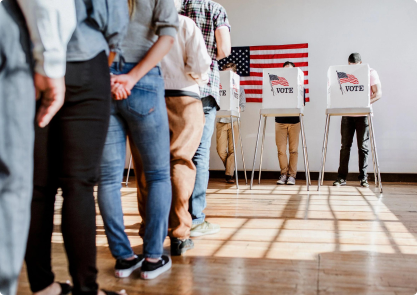
If you are in line by 7:00 PM when the polls close, you are legally allowed to vote.
Do not leave the line until you have cast your ballot. Poll workers are required to let everyone in line vote.
Step 3
Made a mistake? No problem. Before you cast your ballot, ask a poll worker for a new one so you can correct it.
Step 4
If voting machines are not working, you can ask for a paper ballot. Poll workers can help you understand your options.
Step 5
You deserve a voting experience that is accessible, private, and respectful. You cannot be turned away because of a disability, including an intellectual or mental health disability.
What you're entitled to:
Quick requests you can make:
Step 6
Bring a helper
If you need help because of a disability, or because you have difficulty reading or writing English, you can get in-person help from someone you trust.
Language support
Step 7
Sometimes your name is not on the list. It happens, but it doesn't mean you're out of options.
A provisional ballot allows you to still vote. After Election Day, officials investigate whether you were eligible and registered. If you were, your vote gets counted.
If you have a question, run into an issue, or just want guidance, call the nonpartisan Election Protection Hotline. Trained volunteers can help you understand your options and what to do next.
1-866-687-8683
1-888-839-8682
1-844-925-5287
Bengali, Cantonese, Hindi, Urdu, Korean, Mandarin, Tagalog, Vietnamese


